
- DESTINATIONS
- HOLIDAY PACKAGES
- HOTELS
- TRAVEL GUIDES
- EXPERIENCES
- ABOUT US
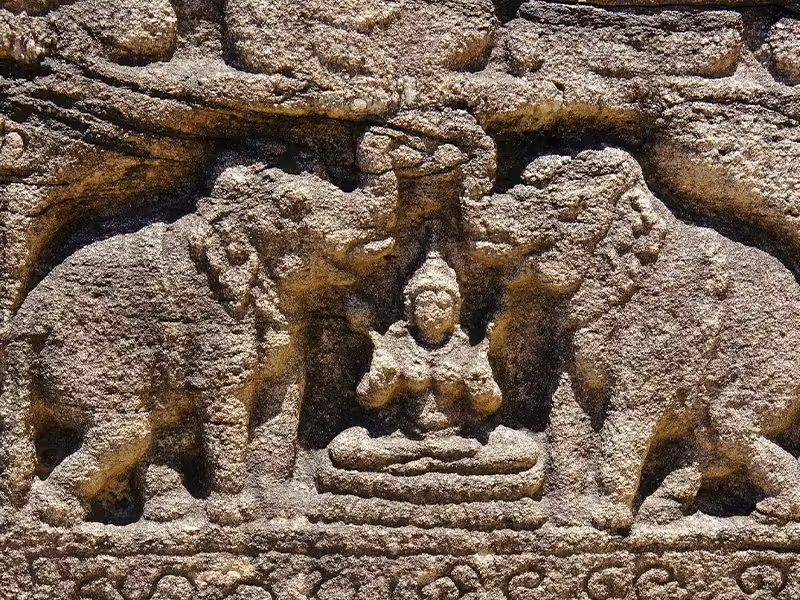
The Polonnaruwa Medieval Royal Ruins provide a captivating glimpse of a once-ancient city in Sri Lanka’s North Central Province, renowned for its exceptionally preserved medieval ruins, monumental statues, and advanced irrigation systems. Once the royal capital from the 11th to 13th centuries CE, Polonnaruwa reflects the zenith of Sinhalese civilization, offering Australian travellers a fascinating glimpse into Sri Lanka’s rich cultural and architectural heritage.
Why Visit Polonnaruwa?
-
UNESCO World Heritage Site (1982)
-
Explore ancient palaces, stupas, and temples
-
See iconic stone Buddhas at Gal Vihara
-
Experience medieval hydraulic engineering at Parakrama Samudra
-
Ideal for history enthusiasts, culture seekers, and photographers
Polonnaruwa remains one of Sri Lanka’s most historically significant destinations and is a highlight of any Cultural Triangle itinerary.
History & Cultural Significance
After the decline of Anuradhapura, King Vijayabahu I (reigned 1055–1110 CE) expelled South Indian invaders and established Polonnaruwa as the new royal capital.
Under King Parakramabahu I (1153–1186 CE), the city flourished, with ambitious public works, elaborate temples, grand palaces, and extensive reservoirs reflecting both prosperity and technological innovation.
The ruins testify to Polonnaruwa’s importance as a political, religious, and economic hub in medieval Sri Lanka.
Architecture & Top Landmarks
Polonnaruwa is divided into a Royal Palace area, religious precincts, and outer administrative zones, all connected by well-planned roads and canals.
Gal Vihara
A remarkable group of rock-cut statues, including seated, standing, and reclining Buddhas, carved in the 12th century. The sculptures are celebrated for their serenity and craftsmanship.
Quadrangle
A central cluster of temples and shrines, including Lankatilaka, Rankoth Vehera, and the Thuparama, showcasing the architectural grandeur of the period.
Royal Palace Complex
Remnants of multi-storey palaces with stone foundations and elaborate water features highlight the sophistication of medieval Sinhalese urban planning.
Parakrama Samudra
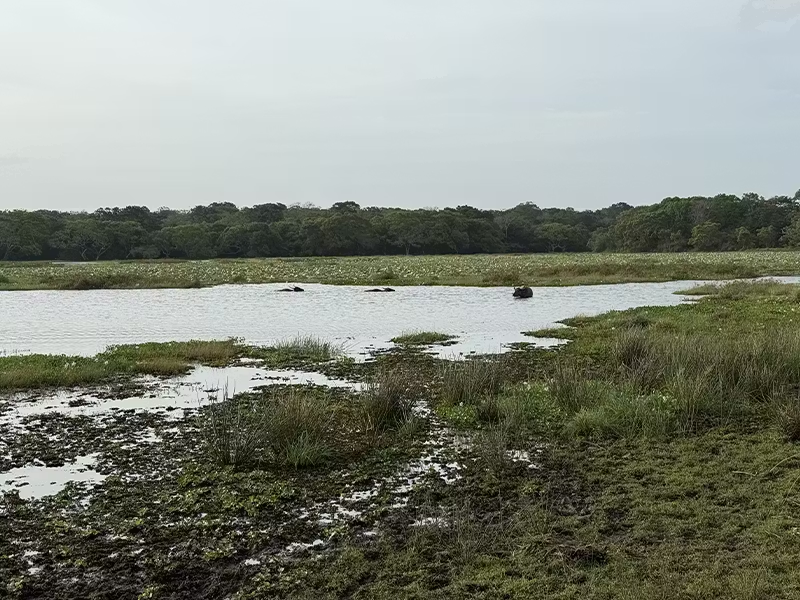
This massive man-made reservoir demonstrates advanced hydraulic engineering, supplying water for agriculture and supporting the city’s population. Smaller tanks, canals, and irrigation networks complement the system, making it a marvel of medieval technology.
Visiting Polonnaruwa
-
Location: North Central Province, Sri Lanka
-
Best Time to Visit: December to April (dry season)
-
Travel Tips: Wear comfortable shoes for walking among ruins; bring water and sun protection
-
Access: Approx. 3–4 hours from Colombo or Kandy; can be combined with Sigiriya or Dambulla
Visitors often explore Polonnaruwa alongside:
-
 Anuradhapura for early Buddhist heritage
 -
Minneriya National Park for wildlife safaris
Why Polonnaruwa is a Must-See Place
Polonnaruwa offers a rare opportunity to step back into medieval Sri Lanka, where art, engineering, and royal ambition converge. The combination of grand palaces, serene Buddha statues, and innovative water systems provides a memorable and educational experience for travellers of all ages.
For Australian travellers, it’s an essential stop to understand the island’s history and witness the ingenuity of past civilizations in a beautiful, open-air setting.
Plan Your Polonnaruwa Visit with BlueSun Travel
Our customised itineraries include:
-
Guided tours of ancient ruins and temples
-
Bicycle or tuk-tuk tours around the archaeological park
-
Combined Cultural Triangle tours with Sigiriya, Dambulla, and Anuradhapura
-
Luxury accommodation nearby for a comfortable stay
Explore more:
Discover the marvels of medieval Sri Lanka — and let Best Sri Lanka Holidays create your perfect Cultural Triangle adventure.

For more information on the Polonnaruwa Medieval Royal Ruins, call our Sri Lanka travel experts now:
Call 1300 799 758 now.
Available to chat 7 days a week!